Saturday, May 29, 2021

Pandemic Pastimes


Now that we are coming out from under the pandemic it is time to do a little documentation. Not that we didn't have time at the time, but perhaps we needed a bit of distance to appreciate what we did, when it felt like we weren't doing anything.

During the initial stay-at-home order we tried anything and everything to stay busy and sane. 

We loomed potholders.


We puzzled puzzles. Charley Harper! 1,000 pieces!


In a phase we called Sewsocial Isolation we finished projects.


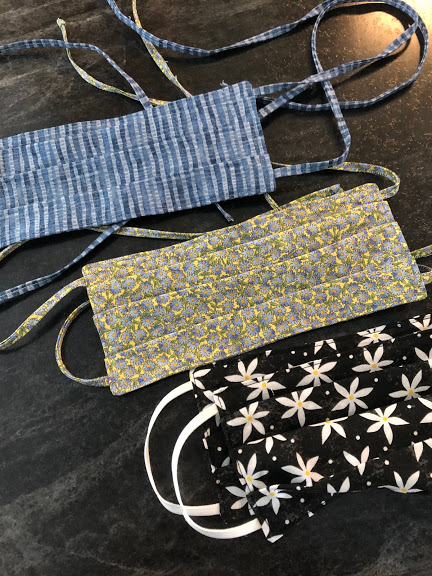
Made masks,


and totes, 


and more totes, 


and more totes, 


and one more tote.


We tried arts and crafts to amuse others staying-at-home.
Thank you USPS!


We got to see sights in our own backyard that we would have missed if we were off sight-seeing around the world.


We got to know our neighbors from a very safe distance.


And we learned that patience, tolerance, and perspective are very valuable things to have.


Saturday, June 6, 2020

NDL's Secrets to Having a Frugal Green Thumb


It’s Spring! We’ve got the planting bug and are more than ready to start enjoying our too-short Wisconsin growing season by stocking up on plants and gardening supplies. Your best, first stop is at your local greenhouse where the gardening professionals really know what they are doing and do it well. If, like me, your eyes are bigger than your shopping cart and your gardening budget, the foray into the wonderland of the garden center can be a challenge. Here are some ideas to help you make good choices to stretch your shopping dollars:

Start plants from seed. The process can be intimidating, but there are resources to guide you through it. Your county extension office, YouTube, workshops, books, garden center staff, and experienced gardeners in your circle of friends and family can provide you with the knowhow and confidence to start at least a few of the things you want to grow from seed.

Buy small plants. Pick up your favorite ornamentals, herbs, and vegetables early and plan to repot at least once before your plants go out to the yard or garden plot; buying plants in four or six packs costs considerably less than buying the same number of plants at a more mature size. You can repot the tiny plants at home and nurture them indoors or in a sheltered place until they are big enough and weather allows them to go all the way out to the garden.

Purchase plants that are easily turned into more plants. Coleus and basil are just two examples of plants that can easily be multiplied by rooting cuttings in a vase of water and then potting the cutting after it has developed a good root system. The parent plant will sprout new growth after you have cut some of the main stems, and if done early in the season, you will be able to add the starts to your garden by the time danger of frost is gone.

Divide perennials. Not only can dividing increase the number of plants in your landscape, it can also provide you with filler for your pots and window boxes. Hostas are great for this. Other easy and attractive options are cranesbill geranium, golden creeping Jenny, lamium, bergenia, sedums and even small shrubs. Perennials used in this way can be dug back into a garden plot before the freeze to overwinter and use again next year.

Send your houseplants outdoors for the summer. When warm weather comes to stay, pair houseplants, such as spider plant, tradescantia, and begonias, with flowering annuals for beautiful container plantings. Then take them back indoors at the end of the season. 

Overwinter annuals for a repeat performance. Geraniums are especially good at surviving the winter indoors, either by going into dormancy or by being placed in a sunny location and continually watering as a houseplant. More details for either method can be found online. Coleus and begonias may also be good candidates for overwintering. If you have the room and the patience, give those and others a chance to hang in there until next year when they can go outside again.


 Save seeds. Seeds of many non-hybrid, heirloom plants can be saved and stored for sowing in subsequent years. Or if plants seed themselves, let them grow where they fall or transplant their volunteer seedlings to other locations in your garden where they might thrive. Brown-eyed Susan, Grandpa Ott morning glory, and Husker Red penstemon are a few garden plants that readily come back year to year from seed. Selective deadheading can control reseeders if they are a little too zealous at creating new plants. Heirloom vegetable seeds can also be saved for next year’s crop. Some saving is as easy as popping open a pod to retrieve the beans inside; others, like tomatoes, take a bit more effort, but with a minimum of instruction from the above-listed resources, saving their seeds is completely doable.

Go with the sure things. It is very tempting to want to try every new and exotic plant that appears for sale, but resist unless you know that it has a good chance of surviving more than one season. If you haven’t seen a plant before, it might be because it is not meant to be here. Local greenhouses are conscientious about offering plants that are suitable for our growing zone. Big box pop up garden centers, not so much. Their distributors are likely providing plants to stores in a region that crosses a spectrum of climates. Read the plant’s tag, look up its growing requirements, and then decide if you want to invest in a plant that may or may not thrive in your garden.

Go native. Some of the best bets for your garden are native plants. Most garden centers have dedicated sections of native perennials, and the above-mentioned resources can help you identify plants suited to our Wisconsin climate. In addition to being hardy, native plants have the added value of attracting a diverse variety of butterflies, bees, and birds to your backyard.

Avoid gimmicks and gadgets. There are no magic tricks for eliminating garden chores, so don’t waste your gardening dollars on items that make those promises. Gardening is fun, but there is a little effort involved. For a successful garden, stick with elbow grease and time-tested tools rather than falling for the newest As-Seen-On-TV offer, even if you can “act now and get a second one free”.

Treat yourself. Finally, after you have demonstrated frugality and pinched a few pennies, go ahead and splurge on a new flower pot, birdbath, perennial variety, showy annual, or whatever your heart desires. You’ve earned it!

5/29/20 - Since creating this post we were talked into presenting the topic as part of a virtual gardening series for a local library. If you are interested you can view it here.

Thursday, March 26, 2020

The Glad Game


Pollyanna is a very old reference from a book written by Eleanor H. Porter in 1913. Probably most people don't know why we say someone "is being a Pollyanna". Pollyanna was the titular character  of the novel, and according to the story her father taught her to find something to be glad about no matter how dire the situation by playing "The Glad Game". She is so good at the game that she influences her very crabby aunt and even an entire town to see the world in a more positive light.

Another more current book with a humorous take on remaining optimistic is "Could Be Worse" by James Stevenson. Despite the everyday woes of the grandkids, or even the amazing events in his tall tale that starts with being lifted out of bed by an eagle and dropped in the mountains where he meets the abominable snowman, his constant refrain is "could be worse". And it is true, isn't it?

Just last night we read in The #1 Ladies Detective Agency book currently on our nightstand that "Mma Ramotswe always managed to put things into perspective. Everything could always be worse, and so be grateful that things are only as bad as they are."

We are simply calling our attempt to find the silver linings during these very unusual times 
"Bad News/Good News". Here we go.

Bad News: No hair appointments for the foreseeable future.
Good News: We never gave in to coloring so we will have no grey roots growing out. As for the bangs - we still own bobby pins, and a scissors if things get desperate.

Bad News: Teeth cleaning cancelled.
Good News: No scolding for flossing deficiency.

Bad News: Stuck at home.
Good news: We have a cozy, big house with a full pantry in a walk-able neighborhood with congenial neighbors to wave to and greet from a distance.

Bad News: No get togethers with friends and family.
Good news: Lots of technology for virtual visits!

Bad News: Dreary weather and rain.
Good News: It is not snowing and signs of spring, including rain, are all around.

Bad News: Absolutely no reasons to procrastinate on the household to-do lists.
Good News: We are actually getting things done. Taxes, census, cleaning, cooking. Check, check, check, check.

Bad News: We get no visitors.
Good News: Pajama time 24/7!

Bad News: Spring and Summer vacations canceled.
Good News: We won't miss seeing our own garden at the peak of the growing season. We can admire every single moment of the magnificent rhododendron, lilacs, and spring epheremals in bloom.

Bad News: Our president is not doing a very good job of reassuring the nation, and indulges in some harmful magical thinking.
Good News: We do not have to be the ones standing behind him at press conferences trying desperately not to react to what he is saying. (Those people deserve a daytime Emmy for their performances.)

It doesn't matter where you are getting your inspiration to find the Good News in your situation, we only hope that you are finding it somewhere. And, we welcome you to share your Good News or source of hope with us here in the comments. If anyone calls you Pollyanna please take it as a compliment and remember, it could be worse.


Wednesday, January 22, 2020

Urban Syrup


There is no acceptable substitute for real maple syrup.
However the price of real syrup is somewhat dear, 


so last March we put our giant West Hill Norway Maple to work. 


With the perfect combo of cold nights and root-warming sunny days, 
the three taps produced more than three gallons of sap a day.


The end result was thirty gallons of sap over a few short weeks,


that we were invited to add to the collection of a Master Gardener friend's hundreds of gallons,


from over a hundred trees she taps.


Boiling it down is a family affair.


We got in on a little time tending the operation in the woods on a day when family had other obligations.


When the numbers and the taste test converge to say it's time to pull off the syrup it goes through the woods, into the house.....


and comes out like this!


Fire up the griddle!


Sunday, March 24, 2019

Here We Go Again


A nifty thrifty website is whencanIreusethiscalendar.com.


Because of it we were able to reuse this lovely thing again this year after a mere six year wait.

Marie Kondo might not approve of that kind of saving, but she will be even more disapproving of the length of time we will have to hang on to it for a third time use. 2019 calendars do not sync up with the yearly dates again until 2030.

Your 2018 calendar is usable again in 2029. Not bad.

If you are a first wave baby boomer you might as well give your 2020 calendar to a millennial packrat right now unless you plan on taking really good care of yourself so you can use it again in 2048. 

Have a good year!

Sunday, January 20, 2019

Trumpet Fan Fare


It doesn't look like much of an indulgence, 


but these Black Trumpet mushrooms 


dried and mixed with course salt give everything from scrambled eggs to your 
bloody Mary glass rim the flourish to take them from ordinary to extraordinary.

When this is gone we'll have to wait for quite awhile until we can make more.
 Trumpet salt definitely gives added incentive to next fall's foraging!

Sunday, January 13, 2019

Eating Locally

It doesn't get much more local than your own kitchen tabletop.

Look what we got on sale!


What else would a mushroom company have on Black Friday special?


Field and Forest Products, a Wisconsin company, offers tabletop fungus farms.

They are entertaining and delicious!


The block yielded about 20 mushrooms in its first fruiting.

After it rests a bit we will ask it to do it all again.

Breakfast just won't be the same until the shiitake crop comes in.


Sunday, January 6, 2019

Think Spring 2019


Come on y'all and Think Spring with your fellow gardeners. 
11 speakers on 13 topics plus lunch, vendors, and door-prizes.

Registration information here


Thursday, December 20, 2018

Fall Fungi Foray


Through the Cable Natural History Museum organized by Emily Stone 
and under the leadership of Tavis Lynch


of Tavis's Wild and Exotic Mushrooms of Cumberland, Wisconsin.


This is some of what we found. 
Chanterelle, Black Trumpet, Wolf Fart puffballs, Oyster, Shrimp of the Woods, 
and Bear's Head Tooth.

A participant who is already an experienced forager brought Lobster and 
Chicken of the Woods for us to try. Both were excellent.


We sorted and IDed them.

And then we cooked them up.


The Black Trumpet mushroom is easy to identify and has a very interesting, truffle-like taste.

The group found enough of these that we each got to take some home. After sautéing some for breakfast I made this. It was great.


Wild Foraged Black Trumpet Mushroom Spread

1 tablespoon ghee or butter
2 tablespoons finely chopped garlic scapes or shallots
1⁄2 cup coarsely chopped black trumpet mushrooms(cleaned)
8 ounce cultured cream-cheese
1 pinch sea salt (real salt) to taste
1 pinch white pepper to taste

Instructions:
In a skillet over medium/low heat, sauté garlic scapes in ghee until soft.
Add in black trumpet mushrooms continue sautéing until mushrooms are cooked through and any liquid is evaporated.
Reduce heat to low, add cream cheese (cut or scooped into roughly 1 tablespoon sized chunks). Stirring constantly until the cream cheese is melted and mixed thoroughly.
Transfer to an air tight jar or container and chill in the refrigerator for at least 2 hours prior to allow the flavors to come together.
Remove dip from at the refrigerator roughly 30 minutes prior to serving to allow it to warm to room temperature. Serve with crackers, toasted bread or raw vegetables.
Recipe Notes:
Use 1 ounce dried black trumpets that have been reconstituted in warm water in place of the fresh.
This recipe makes 16 servings

Sunday, September 9, 2018

Northern Hospitality


RCMP mug recently added to the stable of coffee cups. A fine new specimen for our Mountie collection as well. Thank you, Niece.


We may have been drinking from it when we recently read this book. 


We were afraid a book about 9/11 would be very sad, and it was, but the overwhelming feeling was amazement at the hospitality of an entire community towards the thousands of people stranded on their island when the events of the day caused the grounding of dozens of planes at their airport. 
So many acts of kindness! A beautiful result from a horrible act of violence.

A synopsis from Amazon:

When 38 jetliners bound for the United States were forced to land at Gander International Airport in Canada by the closing of U.S. airspace on September 11, the population of this small town on Newfoundland Island swelled from 10,300 to nearly 17,000. The citizens of Gander met the stranded passengers with an overwhelming display of friendship and goodwill.
As the passengers stepped from the airplanes, exhausted, hungry and distraught after being held on board for nearly 24 hours while security checked all of the baggage, they were greeted with a feast prepared by the townspeople. Local bus drivers who had been on strike came off the picket lines to transport the passengers to the various shelters set up in local schools and churches. Linens and toiletries were bought and donated. A middle school provided showers, as well as access to computers, email, and televisions, allowing the passengers to stay in touch with family and follow the news.
Over the course of those four days, many of the passengers developed friendships with Gander residents that they expect to last a lifetime. As a show of thanks, scholarship funds for the children of Gander have been formed and donations have been made to provide new computers for the schools. This book recounts the inspiring story of the residents of Gander, Canada, whose acts of kindness have touched the lives of thousands of people and been an example of humanity and goodwill.


A recommended by NDL read. And the inspiration for the Broadway play Come from Away.

Sunday, September 2, 2018

The VHC


Out of this jumble of plants in the wagon nursery....


...this little monarch larva found the butterfly weed and started to munch.


It is probable that a monarch butterfly found the plant and laid her egg on it.

That would explain better how a very tiny caterpillar could get to the exact plant it needed to eat. Butterfly weed is part of the milkweed (asclepsis) family. It's the one with the orange flowers.

Although the idea of her daringly scaling the sides of the Radio Flyer to survive is the stuff of super hero stories. 

Caterpillar Girl and Wing Woman - the Origin Story. Look for it on Netflix soon.

Sunday, August 26, 2018

Pretty as a Peacock


And proud as one too.


The fanciest resident of the petting zoo we frequent. And yes, the ladies were definitely impressed.

Sunday, August 19, 2018

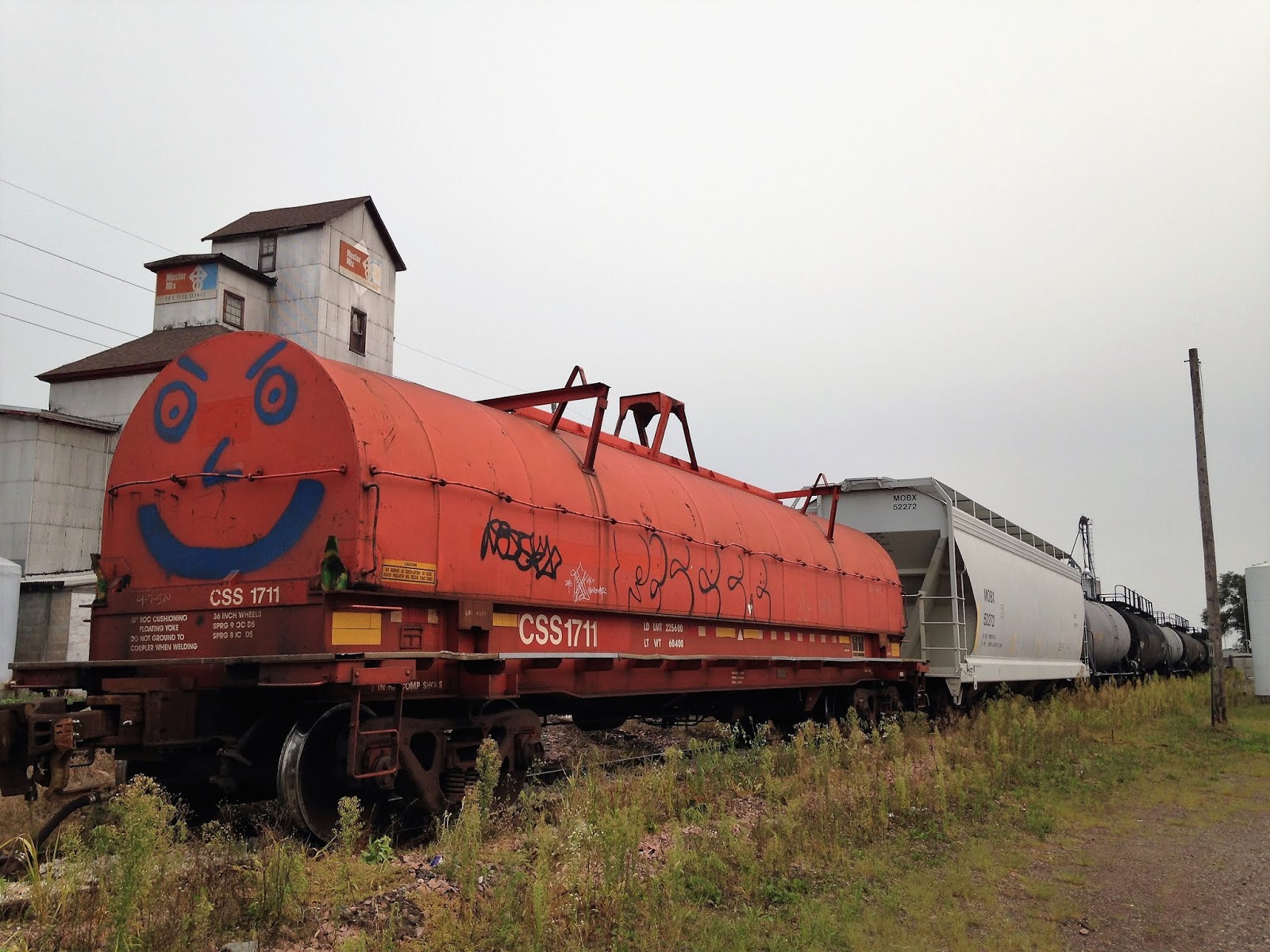
Chad the Container Car


American country cousin to Thomas the Tank Engine.


Hanging out in Bloomer, Wisconsin.


Looks like he's got a mischievous streak. 

And possible gang affiliations. 

We'll be looking for the episode in which he goes to visit his posh relatives.

Trouble, or at the least hi-jinx are likely to ensue.

Tomato Days


So many tomatoes! 


If only we could spread the bounty of the Wisconsin garden out through the year to have real, homegrown tomatoes instead of the pallid impostors passed of as tomatoes at the grocery store in the winter months.

But we can't, so all-you-can-eat BLTs, puttanesca sauce, caprese salad, and salsa are on the menu everyday, several times a day, in tomato season.

And to add to the wonderful experience is the annual reminisce that comes with pulling out a recipe card written in the hand of the giver. 
In this case, Tammy. 

Here is her salsa recipe with adaptations for a smaller quantity. We don't have a many friends as she does. Her recipe would feed a very large group. Ours is just right for a family weekend.


Tammy’s Salsa

4 cups fresh tomatoes (can use part canned tomatoes)
Cilantro to your taste (1/4 bunch)
1/3 large or ½ medium onion
1-3 mild jalapeno peppers, seeded (or more, or some hot ones if you like heat)
1/8 cup (1 ounce) lime juice
1/8 cup (1 ounce) vinegar
2 teaspoons cumin
2 teaspoons chili powder
½ teaspoon each salt and sugar

Chop finely or pulse in food processor.

Serve with chips (and margaritas if you are lucky).


This is pretty spicy stuff for a pastor's wife. We are going to send her some recipes from our church lady cookbook for times when canned soup combos are called for. Although we would never want to quash her spirit, culinary or otherwise, salsa as a funeral potluck offering might make some tongues wag, and burn! Tater tot hot-dish might put out more than one kind of fire.

Best of luck in your new role, Tammy. We're on stand-by with Jello recipes if you need inspiration.

Free Puppies!


Remember the bromeliad


She's quite the champ. Here is her fifth pup.


Going to a new home now that it is weaned.


We wouldn't blame her if she retired from the whelping biz, but it has been fun dividing and sharing her offspring.

Will there be more?